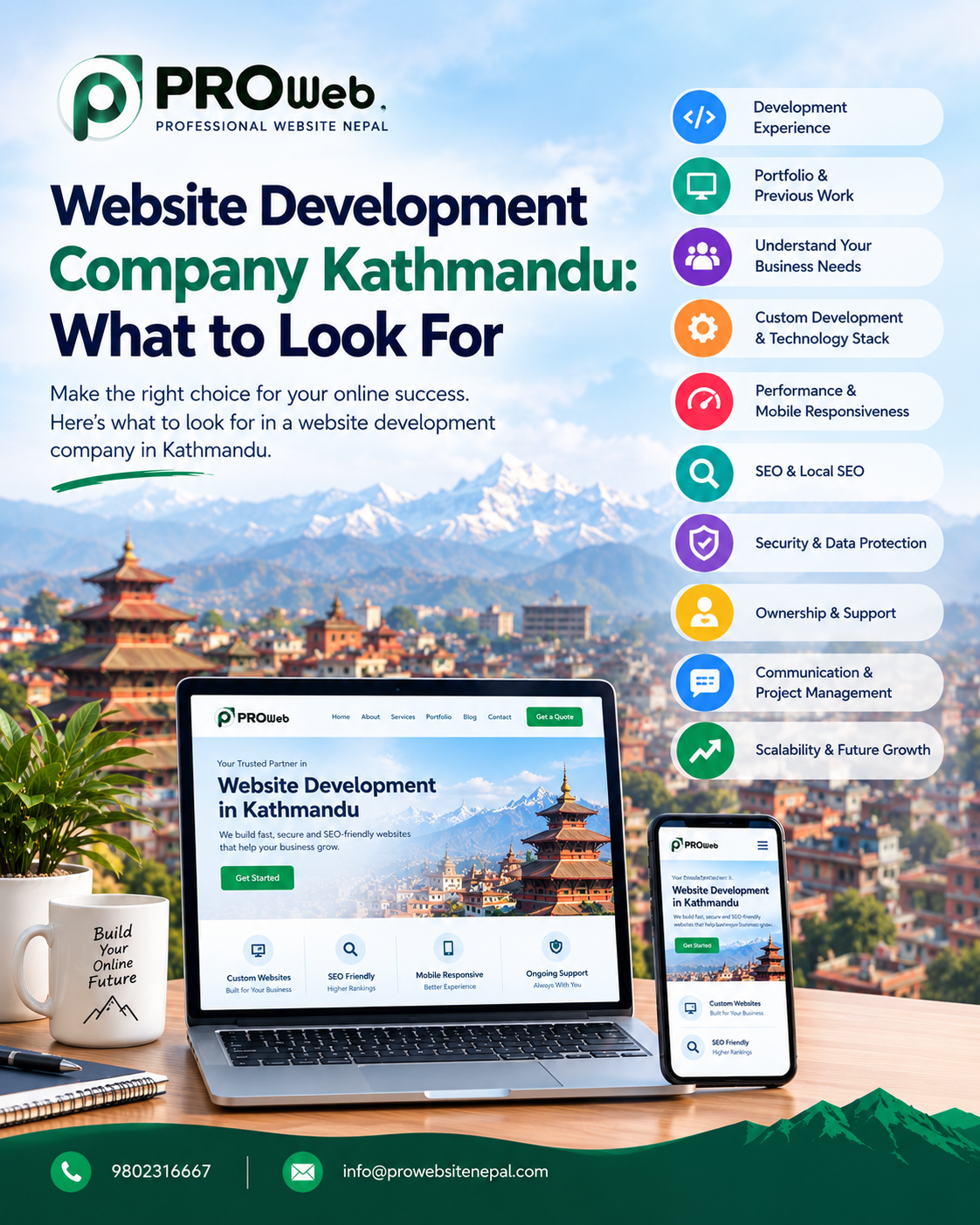
Website Development Company Kathmandu: What to Look For
Choosing a website development company in Kathmandu is an important decision for any business that wants to build a strong digital presence. A website is not simply an online brochure. It can become a major part of your brand, customer acquisition process, sales system, communication channel, and long-term digital strategy.
With many web development providers offering different technologies, packages, designs, and services, it can be difficult to determine what actually matters when selecting a development company.
The right choice should not be based only on the appearance of a company's portfolio or the initial development price. You should also consider development quality, performance, SEO, mobile responsiveness, security, scalability, communication, ownership, maintenance, and how well the company understands your business objectives.
For businesses in Kathmandu, these considerations are particularly important because your website may need to serve both local customers and audiences throughout Nepal or internationally.
Why Choosing the Right Website Development Company Matters
Your website represents your business online. For many potential customers, it may be the first place they learn about your company, services, products, location, or credibility.
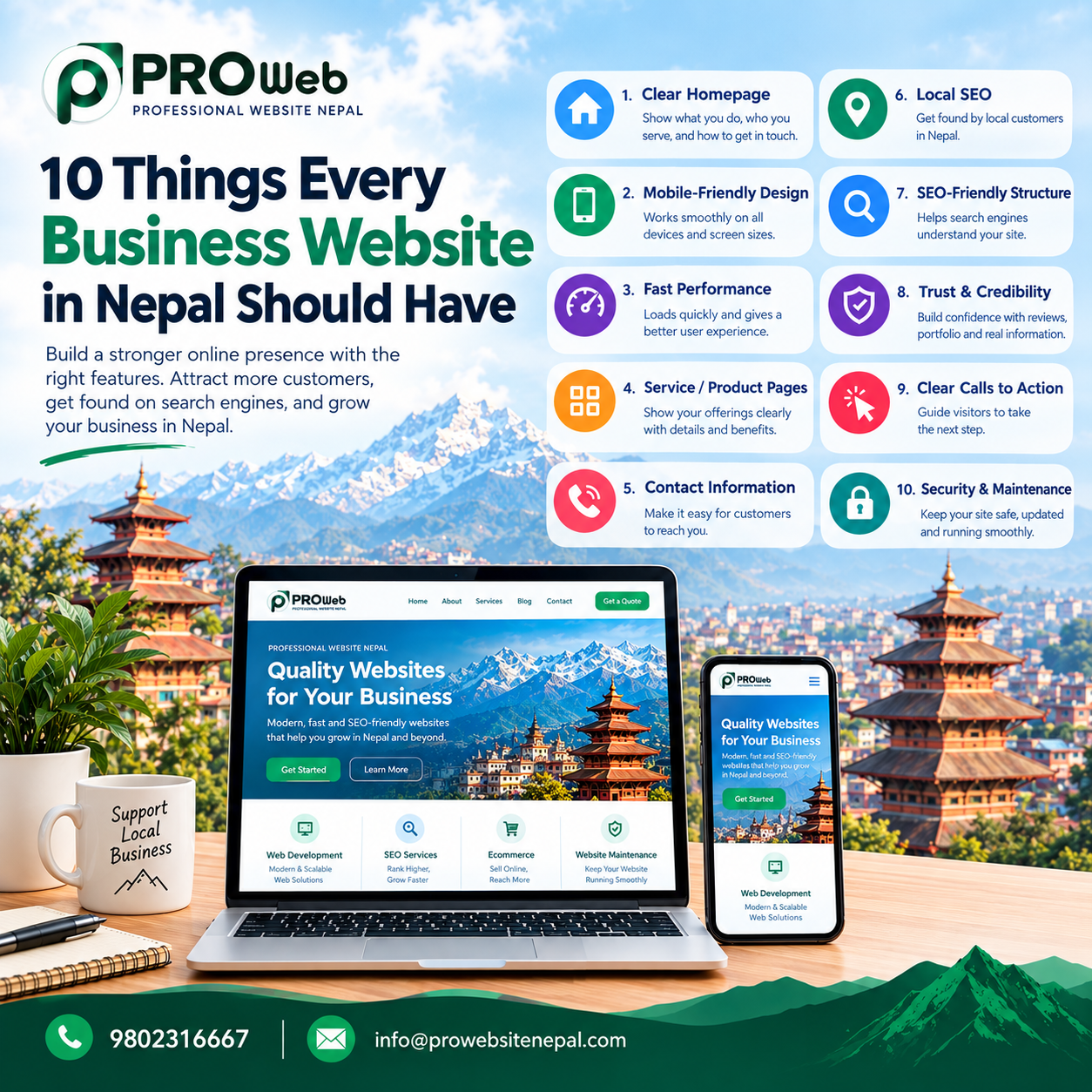
A professionally developed website should therefore do more than look attractive. It should load efficiently, work properly across devices, provide clear information, support search visibility, and make it easy for visitors to take action.
Google's current documentation emphasizes that good page experience involves multiple factors, including Core Web Vitals, secure delivery, mobile usability, and avoiding intrusive experiences. Google also notes that strong Core Web Vitals alone do not guarantee top search rankings.
This means website development and SEO should not be treated as completely separate activities.
1. Look at Their Development Experience
One of the first things to evaluate is the company's actual development experience.
Ask:
How long have they been developing websites?
What types of websites have they built?
Do they work with businesses similar to yours?
Can they handle custom functionality?
Do they provide ongoing technical support?
Do they understand both frontend and backend development?
A company that has experience across different website requirements may be better prepared to handle changes as your business grows.
However, experience should not be judged only by the number of years a company claims to have operated. Look at the quality and relevance of its previous work.
2. Review Their Portfolio Carefully
A portfolio gives you an opportunity to understand how a development company approaches real projects.
Instead of only looking at whether the websites look attractive, examine:
Website loading speed
Mobile responsiveness
Navigation
Page structure
Content organization
Visual consistency
Calls to action
Contact functionality
Overall usability
Search-friendly structure
Open several portfolio websites on your phone as well as your computer.
A website can look impressive in a presentation while providing a poor experience when actually used.
3. Make Sure They Understand Your Business
A good website should be built around your business objectives rather than around a generic template.
Before development begins, the company should understand:
What your business does
Who your customers are
What services or products you offer
What makes your business different
What actions you want visitors to take
Which locations you serve
How customers currently contact you
What you expect the website to achieve
For example, a hotel website, consulting company, ecommerce store, restaurant, educational institution, NGO, and construction company may all require completely different website structures.
The development process should reflect those differences.
4. Check Whether They Offer Custom Development
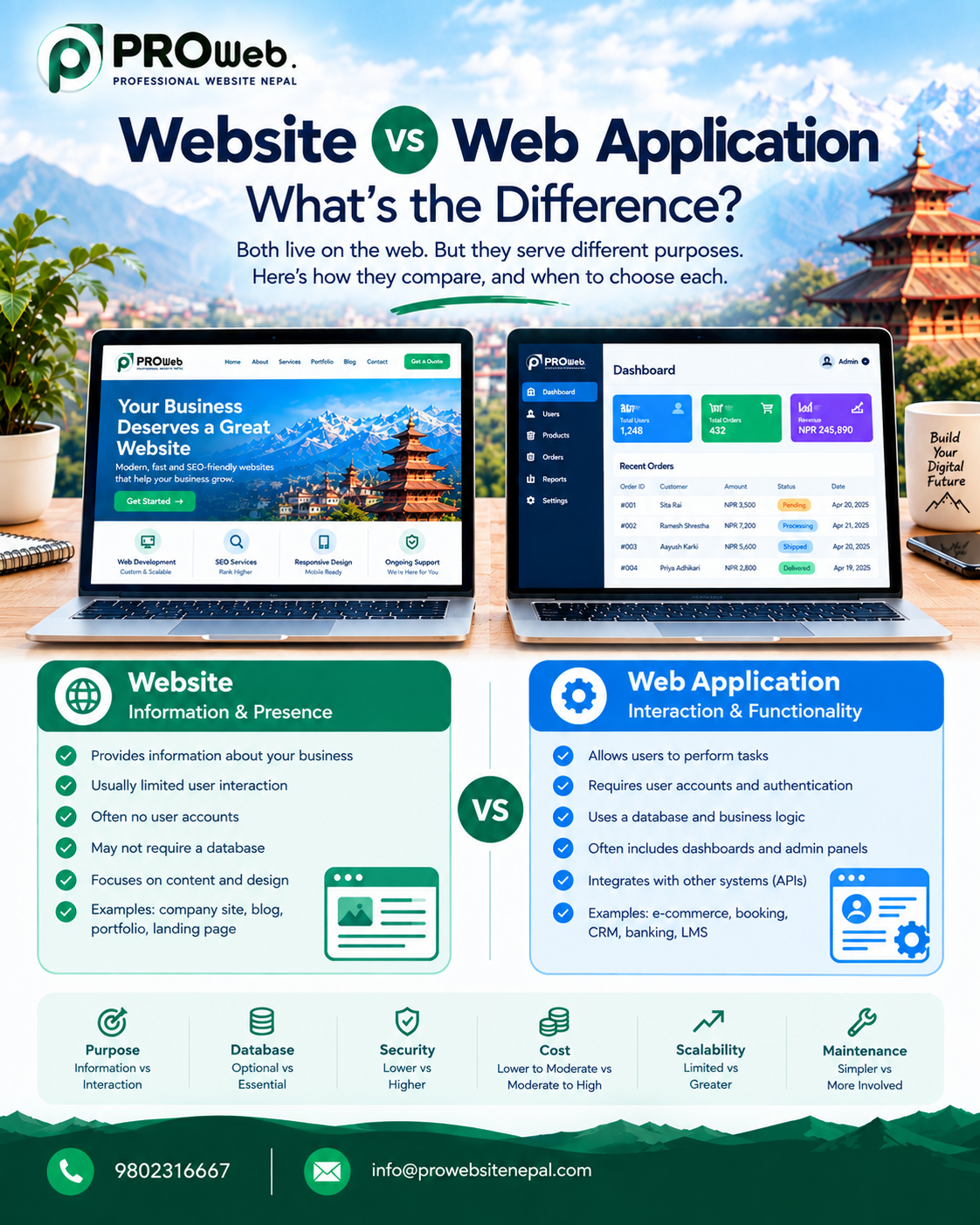
Not every business requires a completely custom-built website. However, you should understand what level of customization your development company can provide.
Some websites can be effectively developed using established platforms and content management systems. Others may require custom development because of specific workflows, integrations, databases, user systems, or business logic.
Ask the company:
Which platform will you use?
Why is that platform appropriate?
Can custom features be added later?
Can the design be customized?
Can the database structure be extended?
Can the website integrate with other systems?
The important point is that the technology should serve the business requirement rather than the other way around.
5. Pay Attention to Website Performance
Website speed should be considered from the beginning of development rather than treated as an afterthought.
A website can become slow because of:
Large images
Excessive JavaScript
Poorly optimized CSS
Heavy plugins
Inefficient database queries
Slow hosting
Unnecessary third-party scripts
Poor caching
Unoptimized media
Performance also matters for user experience and search visibility. Google identifies Core Web Vitals as part of the signals its ranking systems use, while also emphasizing that page experience involves more than one metric.
Ask the development company how performance will be handled before the website is launched.
6. Make Mobile Responsiveness a Priority
A large portion of modern website traffic comes from mobile devices.
Your website should work properly on:
Smartphones
Tablets
Laptops
Desktop computers
Different screen sizes
Different orientations
Mobile responsiveness involves more than simply shrinking a desktop layout.
Navigation, buttons, forms, images, typography, spacing, menus, and content hierarchy should all adapt appropriately to smaller screens.
Google also includes mobile display as one of the factors site owners should consider when evaluating overall page experience.
7. Ask About SEO-Friendly Development
Search engine optimization should be considered during development rather than added after the website is completed.
A development company should understand technical elements such as:
Search-friendly URLs
Page titles
Meta descriptions
Heading structure
Internal linking
XML sitemaps
Robots.txt
Canonical URLs
Image optimization
Structured data
Mobile responsiveness
Website speed
Crawlability
Indexability
Google provides Search Console and other Search Central resources specifically for understanding how Google crawls, indexes, and displays websites in Search.
SEO-friendly development does not mean guaranteeing a particular Google ranking. Instead, it means creating a technically sound foundation that allows search engines to understand and access your website.
8. Consider Local SEO for Kathmandu Businesses
If your business serves customers in Kathmandu or specific areas of Nepal, local search visibility can be important.
Your website should clearly communicate relevant business information such as:
Business name
Address
Phone number
Service areas
Business category
Opening hours where relevant
Contact information
Location information
Structured data can also help search engines understand business information. Google's LocalBusiness documentation explains how structured data can communicate details about a business and recommends validating structured data and ensuring that pages can be accessed and crawled.
Local SEO should be treated as part of a broader strategy rather than simply adding the word "Kathmandu" to every page.
9. Evaluate Their Security Practices
Website security should be considered before launch.
Ask about:
HTTPS
Secure authentication
Password protection
Software updates
Database security
Backups
Access control
Server security
Form security
Malware monitoring
Security maintenance
Security requirements vary depending on the type of website.
An informational business website may have different requirements from an ecommerce platform, membership website, or system containing customer accounts.
10. Ask About Website Ownership
This is an area businesses sometimes overlook.
Before starting a project, clarify who will own:
Domain name
Hosting account
Website source code
Database
Design assets
Website content
Business email accounts
Third-party service accounts
You should understand what access you will receive after the project is completed.
A professional development agreement should make ownership and access responsibilities clear.
11. Understand the Technology Stack
You do not necessarily need to become a developer to evaluate the technology being proposed.
However, you should understand the general stack.
Depending on the project, a website might use:
WordPress
Laravel
PHP
React
Next.js
Other CMS platforms
Custom frontend systems
Custom backend systems
APIs
Cloud infrastructure
The important question is not simply whether a technology is popular.
Ask why the company selected it for your specific project.
The technology should support your requirements for content management, performance, functionality, security, integrations, and future development.
12. Look at Their Approach to Website Design
Good website design is not only about colors, animations, and attractive graphics.
A business website should have a clear visual hierarchy.
Visitors should quickly understand:
What the company does
What products or services are available
Why they should consider the company
How to contact the business
What they should do next
Important design elements include:
Clear navigation
Readable typography
Consistent spacing
Strong visual hierarchy
Appropriate imagery
Clear buttons
Accessible forms
Mobile-friendly layouts
Consistent branding
The design should support the user's journey rather than simply decorate the page.
13. Check Their Content Strategy
Website development and website content are closely connected.
Ask whether the company:
Helps organize website content
Provides content recommendations
Understands service-page structure
Supports SEO-friendly content
Optimizes headings
Handles images appropriately
Helps organize calls to action
If you already have content, determine whether content migration is included.
If new content is required, clarify whether copywriting is included as part of the project or handled separately.
14. Ask About Integrations
Modern business websites often need to communicate with other platforms.
Depending on your business, you may need:
Payment gateways
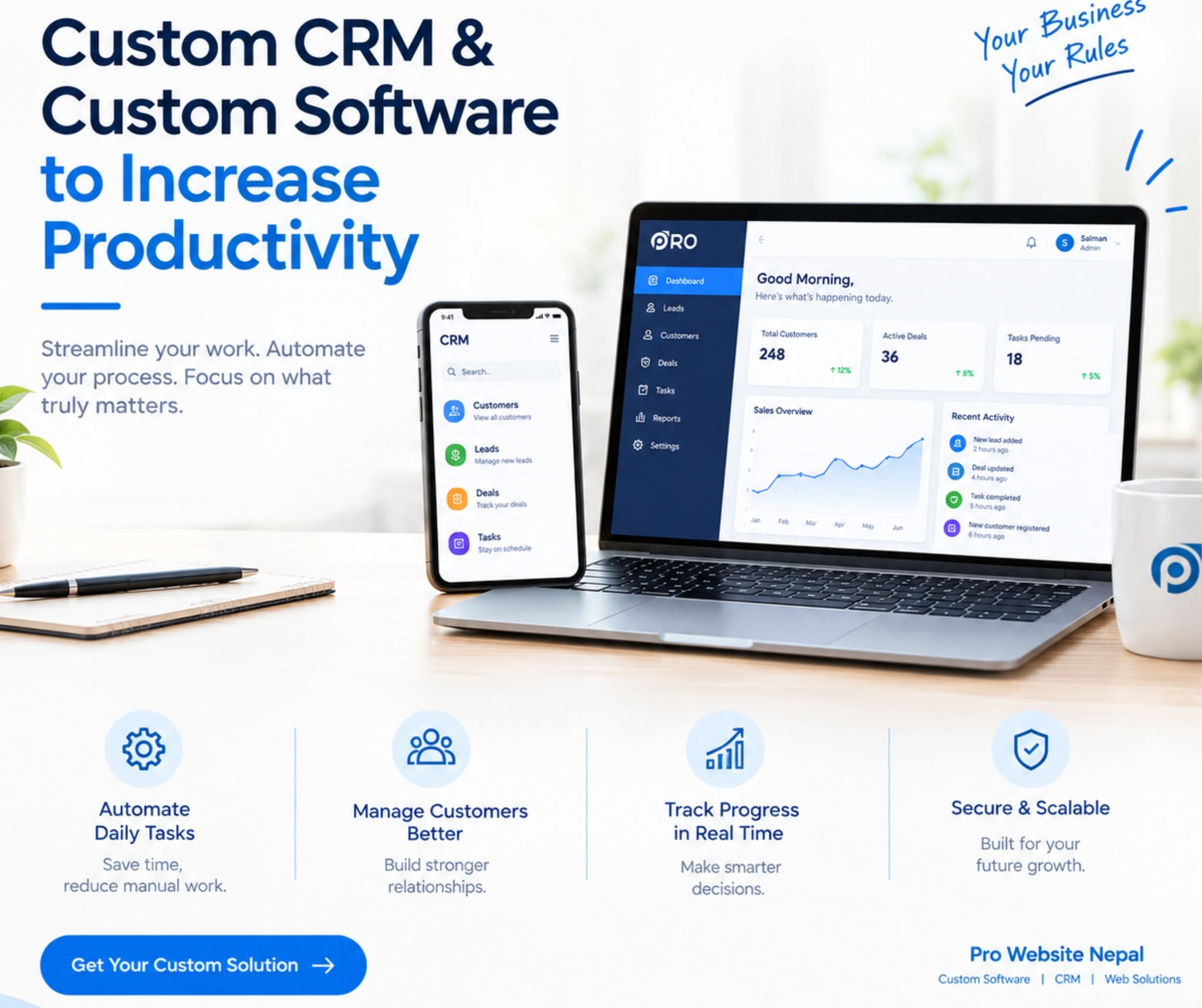
CRM systems
Email marketing
Accounting systems
Booking systems
Shipping services
Social media
Analytics
Maps
Customer management systems
External APIs
Before development starts, create a list of required integrations.
Then ask the development company whether each integration is included in the project scope.
15. Understand the Development Process
A professional development process should be understandable to the client.
A typical project may involve:
Discovery
Understanding the business, audience, objectives, features, and technical requirements.
Planning
Creating the website structure, page hierarchy, functionality requirements, and development plan.
Design
Creating the visual interface and user experience.
Development
Building the frontend, backend, database, integrations, and required functionality.
Testing
Checking functionality, responsiveness, forms, links, performance, security, and compatibility.
Launch
Deploying the website to the production environment.
Maintenance
Continuing updates, monitoring, improvements, and technical support.
Ask your development company what process they follow and what your involvement will be at each stage.
16. Ask About Testing
A website should be tested before it goes live.
Important areas include:
Desktop responsiveness
Mobile responsiveness
Forms
Navigation
Links
Browser compatibility
Page loading
Images
Search engine accessibility
Security
Contact functionality
Database operations
Third-party integrations
Testing helps identify issues before customers encounter them.
17. Consider Scalability
Your website may start small but grow over time.
A business might eventually need:
More pages
More products
User accounts
Online payments
Additional languages
New services
Advanced search
Customer dashboards
API integrations
Ecommerce functionality
Marketing automation
Ask whether the proposed architecture can support future requirements.
You don't necessarily need to build every future feature immediately. The important thing is to avoid creating unnecessary technical limitations.
18. Ask About Maintenance and Support
Website development does not always end at launch.
Depending on the technology and project, ongoing support may include:
Security updates
Backups
Bug fixes
Content updates
Performance optimization
Server monitoring
Technical troubleshooting
SEO maintenance
Feature improvements
Before signing a contract, understand what happens after launch.
Ask:
Is maintenance included?
For how long?
What support channels are available?
How quickly are technical issues handled?
Are future changes charged separately?
Who manages hosting and server issues?
Having clear expectations can prevent problems later.
19. Compare Project Scope, Not Just Price
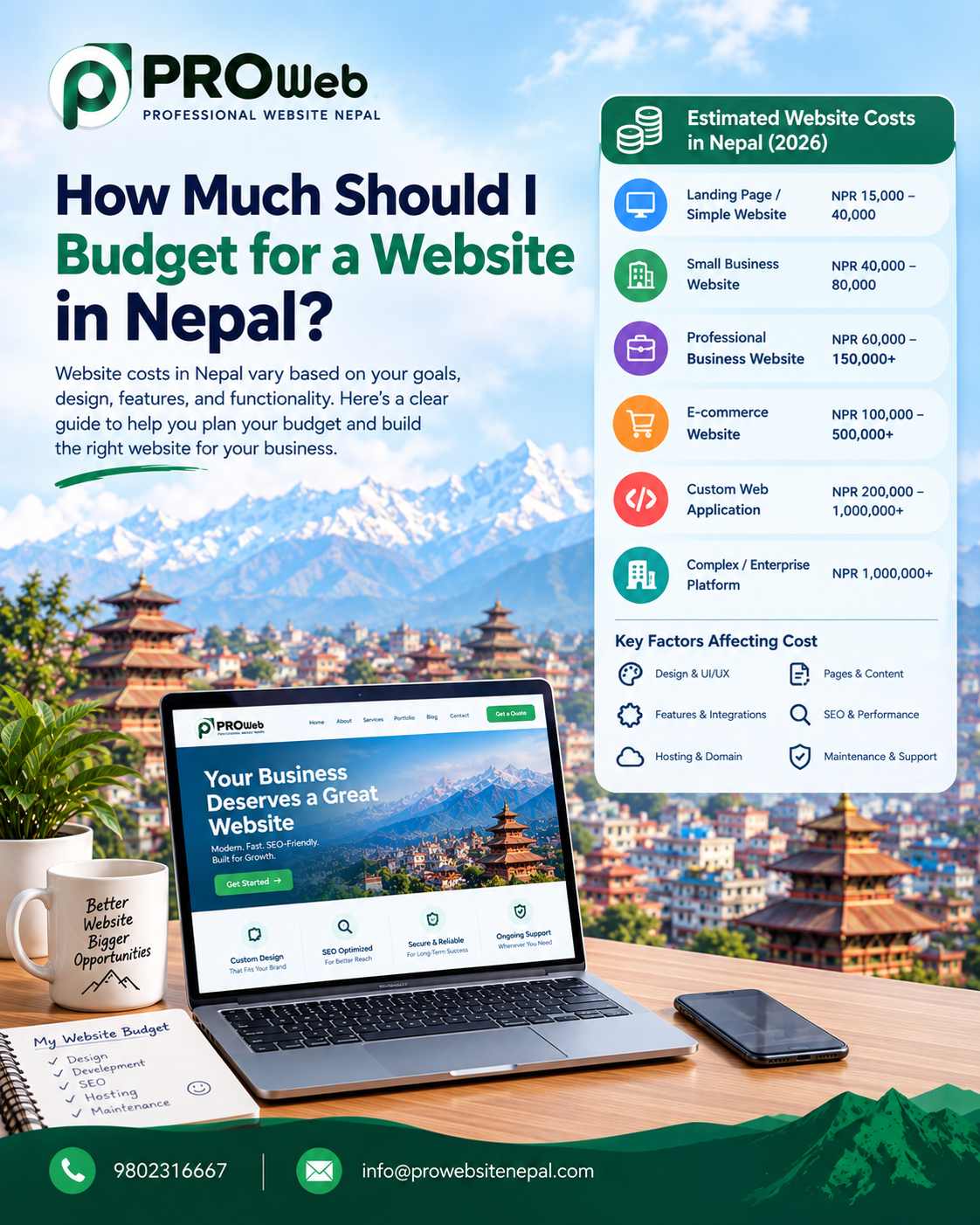
When comparing website development companies in Kathmandu, looking only at the cheapest quotation can be misleading.
Two companies may provide completely different services under similar descriptions.
One quotation might include:
Custom design
SEO-friendly development
Content migration
Mobile optimization
Testing
Security configuration
Analytics
Deployment
Maintenance
Another might only cover basic website development.
Instead of asking only, "How much does the website cost?", ask:
"What exactly is included in the cost?"
Compare the scope, technology, functionality, support, ownership, and expected deliverables.
20. Check Communication and Project Management
Communication can significantly affect a website project.
You should know:
Who your main contact is
How project updates are provided
How feedback is submitted
How revisions are handled
How approvals work
How technical questions are explained
How delays are communicated
A technically capable company still needs an organized process for communicating with clients.
21. Make Sure You Can Manage Your Website
Depending on your project, you may need a content management system or administrative dashboard.
You might want to update:
Pages
Blog posts
Products
Images
Services
Testimonials
Contact information
Categories
Other business content
Ask how content management will work after launch.
If an admin panel is included, request a demonstration of the system before final approval.
22. Look Beyond Templates and Visual Similarity
Templates can be useful for certain projects, but businesses should understand what they are purchasing.
A template-based website may provide a fast starting point, while a custom development approach can provide greater control over specific design and functionality requirements.
The appropriate approach depends on the business.
Ask the company whether your website will be:
Template-based
Theme-customized
CMS-based
Headless
Custom-designed
Fully custom-developed
A combination of different technologies
Then determine whether that approach matches your goals.
23. Check Analytics and Search Monitoring
A business website should ideally have a way to understand how visitors interact with it.
Depending on your needs, this can include:
Google Analytics
Google Search Console
Conversion tracking
Form tracking
Search performance monitoring
Traffic analysis
Google Search Console can help website owners monitor search performance and understand whether Google can crawl and index their pages.
Analytics should be configured with your business goals in mind rather than simply installed without a measurement plan.
24. Watch for Unrealistic SEO Promises
Be careful with companies that guarantee specific Google rankings or promise instant results.
SEO involves many factors, including technical implementation, content quality, competition, search demand, authority, user experience, and changes in search systems.
A development company can build a technically strong foundation, but no responsible developer can control Google's ranking systems.
A better question is:
"What SEO foundations will you implement as part of the website development?"
25. Think About Long-Term Value
A website is a long-term business asset.
When evaluating a development company, consider whether the website will remain useful as your business changes.
Think about:
Performance
Security
Scalability
Content management
SEO
Ownership
Maintainability
Integrations
Future development
Technical support
The initial development cost is only one part of the total value of a website.
Website Development Company Kathmandu: Questions to Ask Before Hiring
Before selecting a company, you can use this checklist:
What technologies will you use?
Why are those technologies appropriate for my project?
Will the website be custom-designed?
Is mobile responsiveness included?
What SEO features are included?
How will website speed be handled?
What security measures will be implemented?
Who owns the domain and website?
Will I receive the source code and administrative access?
Is hosting included?
Are backups included?
What integrations are supported?
How many revisions are included?
What testing will be performed?
What happens after launch?
Is maintenance available?
How are future changes charged?
How will analytics and Search Console be configured?
What is the expected development timeline?
What exactly is included in the final quotation?
Why Local Knowledge Can Matter
Working with a Kathmandu-based development company can provide practical advantages for businesses operating in the local market.
A local development team may understand:
Nepali business requirements
Local customer behavior
Kathmandu business areas
Local communication preferences
Nepali payment options
Local service areas
Nepal-focused SEO requirements
Local business information
However, location alone should not be the deciding factor.
The quality of development, communication, technical capability, and understanding of your business requirements should remain important considerations.
Custom Website Development for Kathmandu Businesses
Different businesses need different website architectures.
A professional services company may need service pages, lead-generation forms, team profiles, and appointment requests.
An ecommerce company may need product management, payment gateways, inventory management, shipping integration, customer accounts, and order processing.
A hotel may need room information, booking functionality, location information, galleries, and tourism-focused content.
A real estate company may need property listings, search and filtering, inquiry forms, maps, and agent information.
This is why the development process should begin with requirements rather than simply selecting a template.
Professional Website Nepal Approach
Professional Website Nepal focuses on developing websites around business requirements rather than treating every project as the same website package.
The goal is to create websites that are:
Fast
Secure
Responsive
Scalable
SEO-friendly
Easy to navigate
Customized to business requirements
From planning and design to development, optimization, deployment, and post-launch support, each stage should contribute to the website's long-term usefulness.
For businesses in Kathmandu and across Nepal, the objective is to create a website that functions as a practical business asset rather than simply an online presence.
Final Thoughts
Choosing a website development company in Kathmandu requires more than comparing portfolios and prices.
Look at the entire development process.
Consider the company's technical experience, portfolio, development approach, performance practices, SEO knowledge, security standards, communication, ownership policies, scalability, testing, integrations, and post-launch support.
A well-developed website should represent your business professionally while providing a strong foundation for future growth.
Before selecting a company, clearly define your goals, required features, budget, timeline, ownership expectations, and long-term plans.
The right development approach is ultimately the one that matches your business requirements and gives you a website that can continue to support those requirements as your business evolves.
Frequently Asked Questions
How do I choose a website development company in Kathmandu?
Start by reviewing relevant portfolio work and evaluating the company's development experience, technical capabilities, SEO knowledge, communication process, pricing structure, ownership terms, and maintenance support.
How much does website development cost in Kathmandu?
Website development costs vary depending on design, number of pages, functionality, technology, integrations, content requirements, ecommerce features, customization, and ongoing support. A detailed project scope is needed before comparing quotations meaningfully.
Should I choose a custom website or WordPress?
It depends on your requirements. WordPress can be useful for businesses that need a content management system and established functionality, while custom development can be appropriate for businesses requiring specialized workflows, functionality, integrations, or greater technical control.
Does website development include SEO?
It depends on the development package. Ask specifically whether technical SEO elements such as clean URLs, responsive design, page performance, metadata structure, sitemap configuration, crawlability, structured data, and Search Console setup are included.
Is website speed important for SEO?
Yes, performance is an important part of overall page experience, and Google states that Core Web Vitals are used by its ranking systems. However, Google also makes clear that good Core Web Vitals scores alone do not guarantee high search rankings.
Should a Kathmandu business invest in local SEO?
If the business serves customers in Kathmandu or other specific geographic areas, local SEO can be an important part of its search strategy. Business information and appropriate structured data can help search engines understand relevant local business details.
What should I ask before signing a website development contract?
Ask about project scope, technology, design, functionality, SEO, performance, security, ownership, hosting, maintenance, revisions, timeline, payment terms, integrations, source-code access, and post-launch support.
Can a website be expanded later?
Yes, but the ability to expand depends on the technology and architecture used during development. Discuss your possible future requirements with the development company before the initial architecture is finalized.
What makes a business website successful?
A successful business website should clearly communicate what the business offers, provide a good user experience, work across devices, load efficiently, support search visibility, establish trust, and make it easy for visitors to contact the business or complete the intended action.