WordPress vs Custom Website: Which Is Right for Your Business?
Choosing the right technology for a business website is an important decision. Two common approaches are building a website with WordPress or developing a website from the ground up using custom code.
Both approaches can produce professional websites. The difference is in how they are built, how much control developers have over the architecture, how functionality is added, and how the website can evolve over time.
WordPress is an open-source content management system that allows users to create websites using themes, plugins, and its built-in content management capabilities. WordPress can also be heavily customized through custom themes, plugins, and development.
A custom website, on the other hand, is developed specifically around the requirements of a business or organization. Its frontend, backend, database structure, functionality, integrations, and administrative systems can all be planned according to the project.
The right choice depends on what the website needs to accomplish.
What Is WordPress?
WordPress is an open-source content management system used to create and manage websites.
It provides a foundation for publishing content and managing users, while themes control much of the site's presentation and plugins extend its functionality.
WordPress can be used for:
Business websites
Blogs
News websites
Portfolio websites
E-commerce stores
Membership websites
Educational websites
Service websites
Content-heavy websites
One of WordPress's major advantages is its large ecosystem of themes and plugins.
Users can select a theme for the site's visual appearance and install plugins to add functionality such as SEO tools, contact forms, security, analytics, e-commerce, caching, and other features.
What Is a Custom Website?
A custom website is developed specifically for a particular business, organization, product, or project.
Instead of starting with a pre-built website structure, developers first understand the requirements and then create the appropriate architecture.
Custom development may include:
Custom UI/UX
Custom frontend
Custom backend
Custom database
Custom CMS
Admin dashboards
User authentication
Custom APIs
Payment integrations
Business-specific workflows
Advanced search
Booking systems
Customer portals
Role-based permissions
Specialized reporting
The website can therefore be designed around the business rather than requiring the business to work around a pre-existing structure.
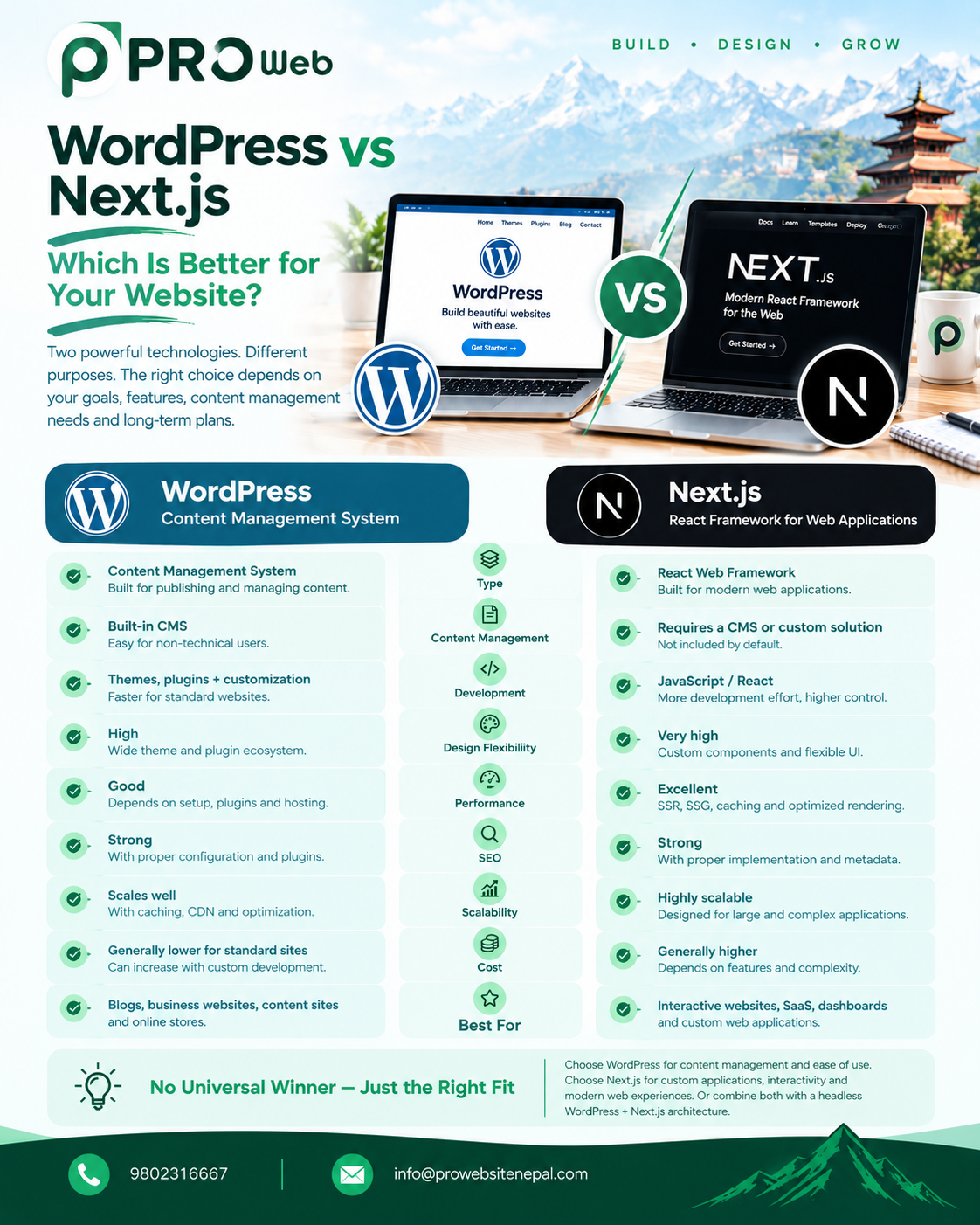
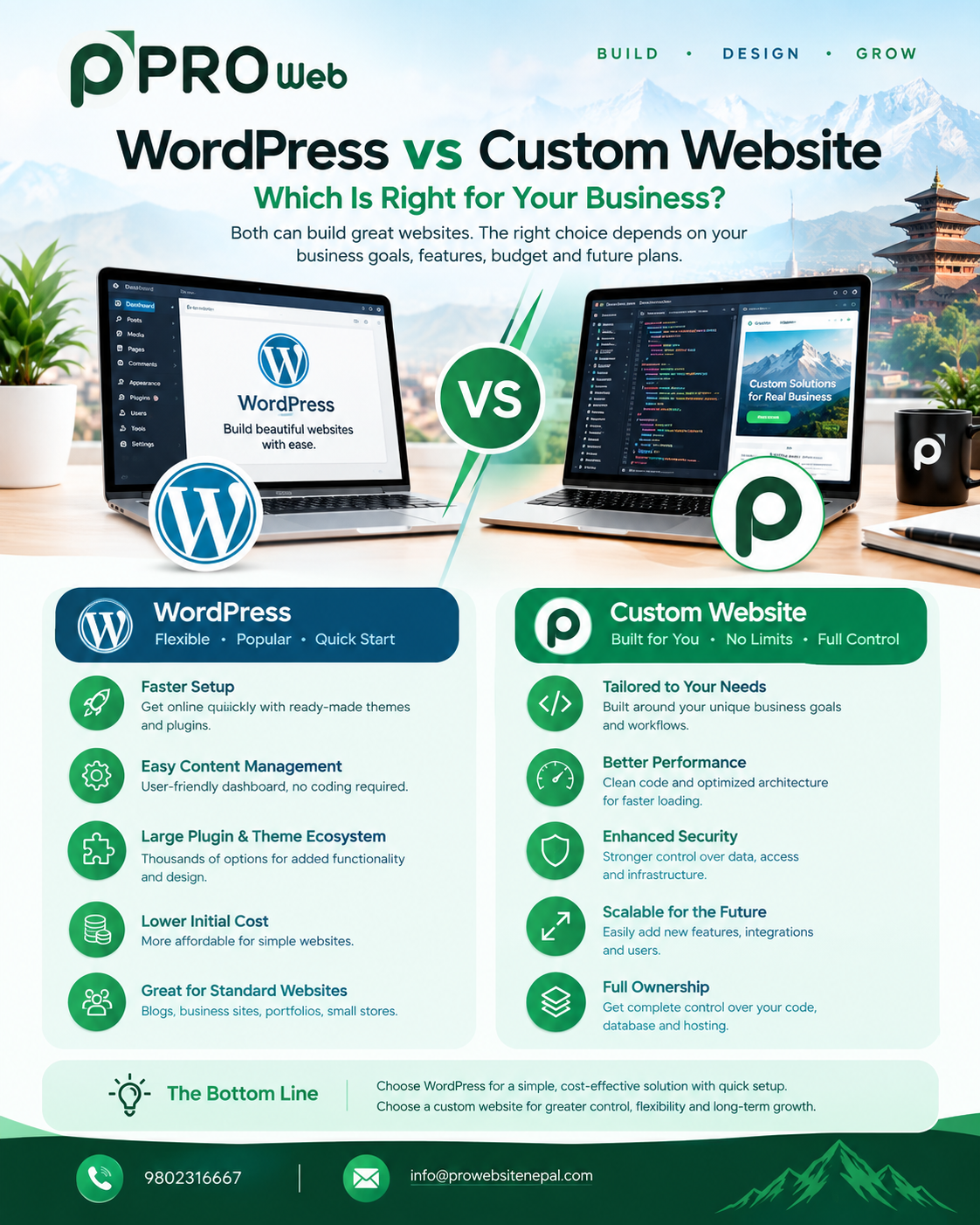
WordPress vs Custom Website at a Glance
Factor | WordPress | Custom Website |
|---|---|---|
Initial setup | Generally faster | Requires planning and development |
Content management | Built in | Can be developed specifically |
Themes | Large theme ecosystem | Custom interface |
Plugins | Large plugin ecosystem | Custom functionality |
Design control | High, depending on implementation | Very high |
Functionality | Often plugin-based | Built around requirements |
Development flexibility | High | Very high |
Performance | Depends on implementation | Can be optimized around the architecture |
Maintenance | Core, theme, and plugin updates | Custom maintenance |
Scalability | Can scale with proper architecture | Can be designed around expected growth |
Development time | Often shorter for standard sites | Usually longer |
Technical control | Depends on setup | Greater control over architecture |
Cost | Can be lower for simpler projects | Depends heavily on requirements |
Best suited for | Many standard content websites | Specialized or highly customized projects |
How WordPress Websites Are Usually Built
A typical WordPress project may involve:
Installing WordPress
Selecting or creating a theme
Configuring website settings
Adding plugins
Creating pages
Adding website content
Configuring SEO
Testing the website
Optimizing performance
Launching the site
A developer can also create a custom WordPress theme or custom plugins.
WordPress itself provides official developer resources for building custom themes, plugins, and integrations, so WordPress is not limited to pre-built themes.
How Custom Websites Are Usually Built
Custom development generally begins with requirements rather than a theme.
A typical process can involve:
Requirement analysis
Website planning
Sitemap and information architecture
UI/UX design
Frontend development
Backend development
Database development
CMS or admin panel development
API and third-party integrations
SEO implementation
Testing
Performance optimization
Deployment
Maintenance and support
This approach takes more planning because the website is being developed specifically for the project.
WordPress: The Main Advantages
Faster Development for Standard Websites
WordPress can reduce development time because much of the basic CMS functionality already exists.
For a standard business website, developers may not need to create every content-management feature from scratch.
Easy Content Management
The WordPress dashboard provides tools for creating and managing content.
This can be useful for businesses that regularly publish:
Blog posts
News
Articles
Pages
Images
Categories
Large Plugin Ecosystem
Plugins can add functionality without developers having to build every feature from scratch.
WordPress's official documentation describes plugins as software that extends WordPress and adds functionality to the core system.
Large Theme Ecosystem
WordPress has a large collection of themes, including block themes and classic themes.
Themes control much of the visual presentation of a WordPress website.
Easier for Many Content-Based Websites
If the primary purpose of the website is publishing and managing content, WordPress can provide a convenient foundation.
WordPress: Potential Limitations
WordPress itself is not necessarily the limitation. The implementation is what matters.
However, certain WordPress projects can become complicated when they depend heavily on themes, plugins, page builders, and third-party integrations.
Plugin Dependency
A website that relies on many plugins may have more components to maintain.
Plugins can also vary in quality and functionality, and WordPress recommends keeping software maintained and updated.
Theme Limitations
A pre-built theme may provide many features, but some of those features may not match the exact requirements of the business.
Trying to force a theme to behave differently from its intended structure can also increase development complexity.
Updates and Compatibility
WordPress core, themes, and plugins may all require updates.
A website owner therefore needs an appropriate maintenance process.
Unnecessary Functionality
Some themes and plugins include functionality that a particular business may never use.
The effect on performance depends on how the website is implemented, so WordPress should not automatically be considered slow simply because it uses plugins or themes.
Custom Website: The Main Advantages
Built Around Business Requirements
A custom website starts with the actual requirements of the business.
If a company needs a specialized workflow, developers can design the system around that workflow.
Greater Architectural Control
Developers can control:
Application structure
Database design
Backend logic
Frontend architecture
APIs
Authentication
Permissions
Data relationships
This can be particularly useful for complex projects.
Custom Functionality
If the business needs functionality that does not fit naturally into an existing plugin or theme, it can be developed specifically for the project.
Performance Can Be Planned From the Beginning
A custom application can be structured around the features it actually needs.
Developers can consider:
Database queries
Asset loading
JavaScript
CSS
Images
Caching
API requests
Server configuration
Performance still depends on development quality and hosting infrastructure, but custom development provides control over the implementation.
Greater Control Over Future Development
A custom architecture can be designed around the company's expected growth.
New functionality can then be developed within the existing architecture.
Custom Website: Potential Limitations
Longer Development Time
A custom website requires more planning and development because functionality may need to be created specifically for the project.
Higher Development Complexity
A custom system may require experienced developers to maintain it.
Maintenance Is Still Necessary
Custom websites are not maintenance-free.
They may require:
Security updates
Server maintenance
Bug fixes
Backups
Performance optimization
Feature development
Database maintenance
Greater Initial Planning
The business needs to clearly communicate its requirements before development.
Poor requirements can lead to unnecessary development or changes later.
WordPress vs Custom Website for SEO
Both WordPress and custom websites can be built with SEO in mind.
The platform itself does not automatically determine search rankings.
Important SEO factors include:
Website structure
Content quality
Search intent
Page speed
Mobile usability
Metadata
Internal linking
Structured data
URLs
Crawlability
Technical SEO
Backlinks
Local SEO
WordPress provides tools and plugins that can assist with SEO, while custom websites can have SEO requirements incorporated directly into their architecture.
Professional Website Nepal describes its custom development approach as incorporating SEO practices from the beginning, including responsive development, on-page SEO, and technical implementation.
WordPress vs Custom Website for Performance
Performance depends on implementation rather than the name of the platform alone.
A well-developed WordPress website can perform well.
A poorly developed custom website can perform badly.
Similarly, a WordPress website with excessive plugins, inefficient assets, or poor hosting can experience performance problems, while a carefully optimized WordPress installation can be fast.
Custom development can provide more direct control over the code and architecture, which can be useful when performance requirements are strict.
WordPress vs Custom Website for Security
Security is important regardless of the development approach.
WordPress websites require attention to:
Core updates
Theme updates
Plugin updates
Strong authentication
User permissions
Hosting security
Backups
Security monitoring
Custom websites require their own security practices, including:
Secure authentication
Input validation
Authorization
Database security
Secure file handling
API security
Server security
Dependency updates
Backups
Neither approach should be considered automatically secure simply because of the technology used.
WordPress vs Custom Website for Scalability
A WordPress website can grow significantly when properly designed and maintained.
However, businesses with highly specialized requirements may eventually require functionality that goes beyond a conventional content-management workflow.
Custom development allows the architecture to be designed around specific growth requirements.
For example, a company might eventually need:
Customer accounts
Multiple user roles
Internal dashboards
Advanced reporting
Custom order management
External API integrations
Mobile applications
Automated workflows
These systems can be built into a custom application architecture.
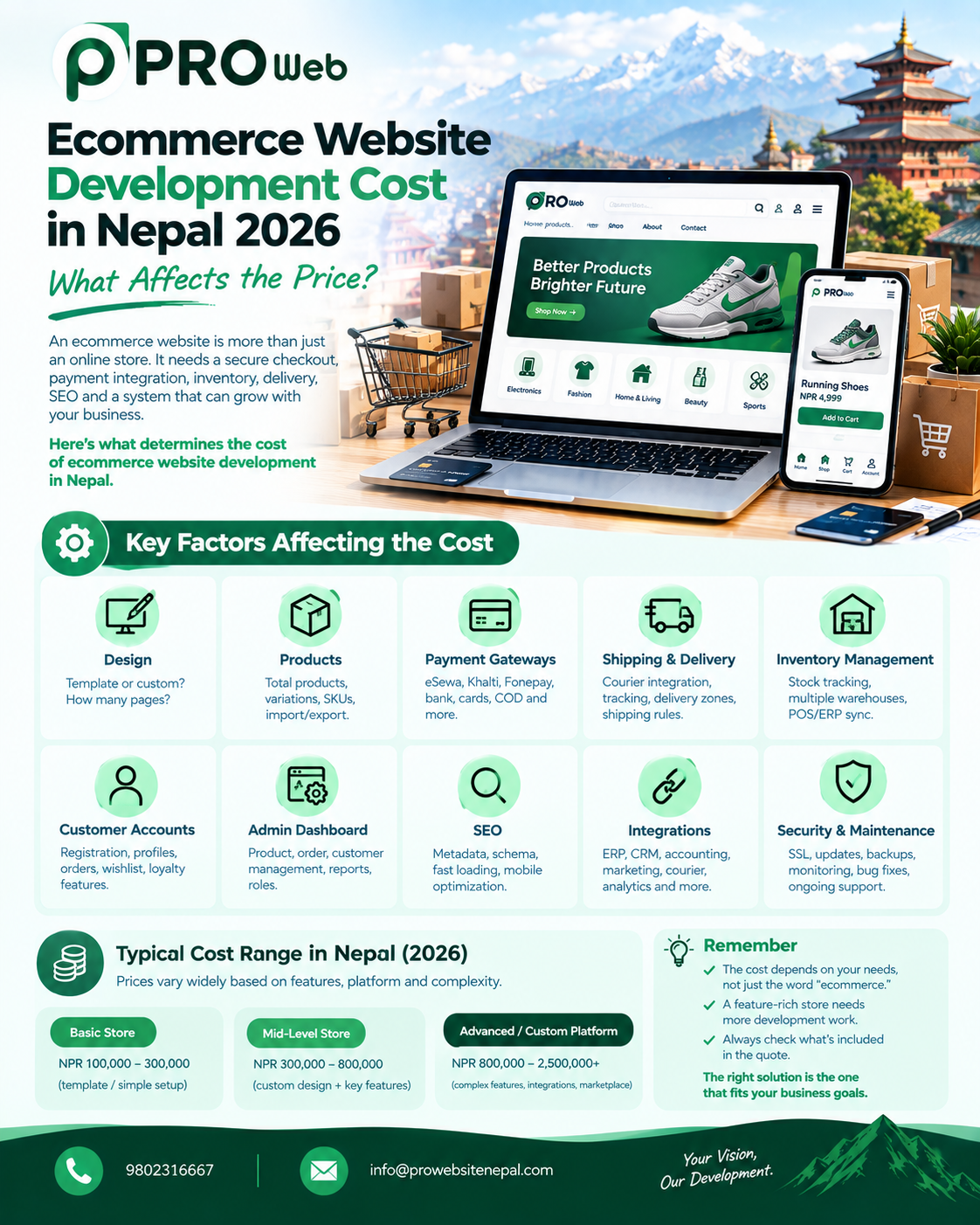
WordPress vs Custom Website for E-Commerce
WordPress can be extended into an e-commerce platform using plugins and additional development.
This can be suitable for many online stores.
A custom e-commerce platform may be more appropriate when the business requires unusual:
Product structures
Pricing systems
Order workflows
Inventory systems
Customer permissions
Payment processes
Logistics integrations
Reporting systems
The choice depends on how closely the business's requirements match the available WordPress ecosystem.
WordPress vs Custom Website for Business Websites
For a standard business website containing:
Home
About
Services
Portfolio
Blog
Contact
WordPress can provide a practical content-management solution.
A custom website may become more relevant when the business requires specialized functionality beyond standard pages.
For example:
A construction company may need project management features.
A hotel may need a specialized booking system.
A school may need student portals.
A logistics company may need shipment tracking.
A marketplace may need multiple user types.
These requirements can justify a more customized architecture.
What About a Custom WordPress Website?
There is an important middle ground.
A business does not necessarily have to choose between a pre-built WordPress website and a completely independent custom application.
WordPress can also be customized.
Developers can create:
Custom themes
Custom plugins
Custom post types
Custom fields
Custom templates
Custom blocks
Custom APIs
Custom dashboards
WordPress's developer documentation specifically supports custom theme and plugin development.
This means “WordPress” and “custom” are not always mutually exclusive.
The more useful question is often:
How much of the website should be based on existing WordPress functionality, and how much should be developed specifically for the business?
When WordPress May Be Suitable
WordPress may be suitable when a business needs:
A content-focused website
Regular blogging
News publishing
A standard business website
A portfolio
A relatively conventional e-commerce store
Easy content management
A large ecosystem of existing extensions
A shorter development timeline
When Custom Development May Be Suitable
Custom development may be appropriate when a business needs:
Unique functionality
Specialized workflows
Custom dashboards
Complex user roles
Advanced integrations
Custom databases
Specialized APIs
Highly specific performance requirements
Greater control over the architecture
A platform that is expected to evolve significantly
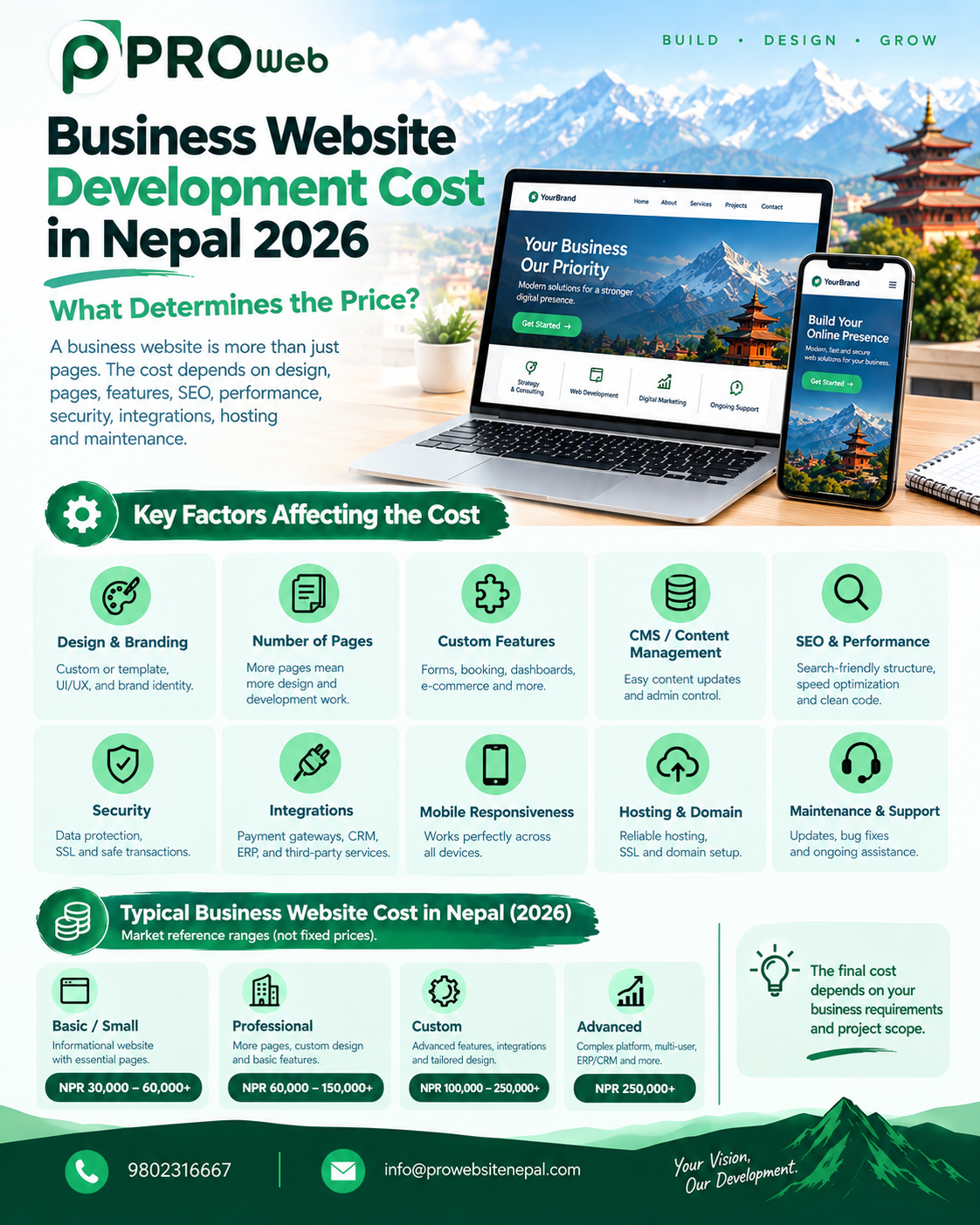
WordPress vs Custom Website Cost
Cost should not be determined simply by the platform name.
A WordPress website can be inexpensive when the requirements are simple and existing themes and plugins meet the needs.
However, a heavily customized WordPress website can require substantial development work.
A custom website can also have a higher initial development cost because the architecture, interface, functionality, CMS, and integrations may need to be created specifically.
The total cost can depend on:
Number of pages
Design requirements
Custom functionality
CMS requirements
E-commerce
APIs
Payment systems
User accounts
Database complexity
SEO
Security
Hosting
Maintenance
Future development
The better question is not simply “Which one is cheaper?”
It is:
Which solution provides the functionality and control the business actually requires?
Ownership and Control
Before starting any website project, businesses should understand what they own and control.
This can include:
Domain
Hosting
Website files
Source code
Database
CMS
Design files
Analytics accounts
Third-party service accounts
With either WordPress or custom development, ownership arrangements should be clearly defined in the project agreement.
Choosing Between WordPress and Custom Development
A useful decision process is to start with the business requirements.
Ask:
What is the primary purpose of the website?
If the main purpose is publishing content and presenting business information, WordPress may be sufficient.
Does the website require unusual functionality?
If the answer is yes, custom development may provide more flexibility.
Who will manage the content?
If non-technical staff need to frequently publish content, a CMS should be an important consideration.
Does the website require complex integrations?
The more specialized the integrations, the more important technical architecture becomes.
Is the website expected to become a larger digital platform?
If the website may eventually include complex applications or workflows, scalability should be considered from the beginning.
How important is complete control over the code?
Businesses requiring direct control over their architecture may prefer custom development.
Why Professional Website Nepal Focuses on Custom Websites
Professional Website Nepal states that it specializes in fully custom websites using clean, core-coded CMS solutions, with an emphasis on performance, flexibility, security, scalability, and SEO.
Its stated development process includes planning, responsive design, core development, on-page SEO, testing, launch, and support.
The company's approach is therefore centered on developing websites around the requirements of each project rather than simply installing a pre-built template and changing its content.
However, the choice between WordPress and custom development should ultimately depend on the individual project's requirements.
Final Thoughts
WordPress and custom websites are both legitimate approaches to website development.
WordPress provides a mature content management system, a large ecosystem of themes and plugins, and a relatively accessible way to build and manage many types of websites.
Custom development provides greater freedom to design the architecture, functionality, database, integrations, and user experience around a particular business.
The important thing is to avoid choosing technology simply because it is popular.
A business website should be evaluated based on:
Business goals
Required functionality
Content management
Performance
SEO
Security
Scalability
Budget
Maintenance
Ownership
Future requirements
For a straightforward content-driven website, WordPress may provide everything that is needed.
For a business requiring specialized workflows, advanced integrations, custom functionality, or greater architectural control, custom development may be more appropriate.
The best website technology is ultimately the one that matches the project's actual requirements.
Frequently Asked Questions
Is WordPress a custom website?
WordPress itself is a CMS, not a specific website design. A WordPress website can use a pre-built theme, a custom theme, custom plugins, or a combination of these approaches.
Is a custom website better than WordPress?
There is no universal answer. The appropriate solution depends on the website's requirements, functionality, budget, content-management needs, and long-term plans.
Is WordPress cheaper than custom development?
A basic WordPress website can require less development work than a comparable custom-built website. However, heavily customized WordPress projects can also become complex and require substantial development.
Is WordPress good for SEO?
Yes. WordPress websites can be optimized for SEO. However, search visibility depends on technical implementation, content, site structure, performance, authority, and ongoing SEO work.
Are custom websites faster than WordPress?
Not automatically. Performance depends on the quality of development, assets, hosting, database queries, caching, and overall architecture.
Can WordPress be customized?
Yes. WordPress supports custom themes, plugins, blocks, templates, APIs, and other development approaches.
Should a small business use WordPress or custom development?
The decision should depend on the business's actual requirements. A small business with standard content needs may find WordPress sufficient, while a small business with specialized workflows may still require custom development.
Can a custom website have a CMS?
Yes. A custom CMS can be developed specifically around the content and workflow requirements of the business.
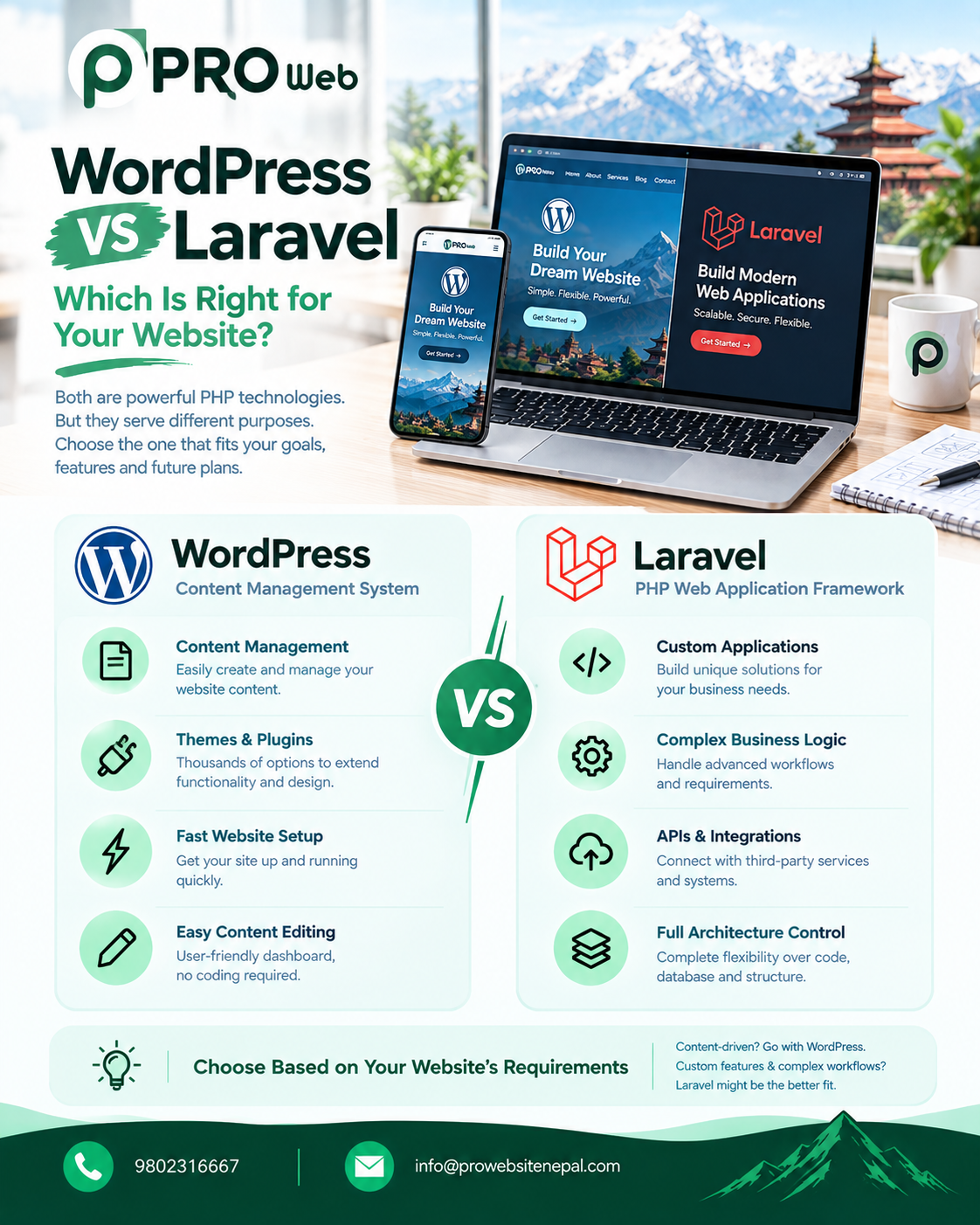
Can a custom website use Laravel?
Yes. Laravel can be used to develop custom web applications and websites requiring backend functionality, authentication, databases, APIs, and specialized business logic.
Does Professional Website Nepal build WordPress websites?
Professional Website Nepal's current website emphasizes fully custom websites and custom CMS development using clean core coding.